Apartment Selection
Best Apartment Floor to Buy in Hurghada: View, Heat, Noise and Resale
Compare low, middle, and high floors using the factors that actually affect daily comfort and long-term value in a Red Sea apartment.
Quick answer
There is no single best floor for every Hurghada buyer. Middle floors usually offer the broadest balance of access, privacy, temperature stability, and resale appeal. High floors can improve openness and view but increase lift dependence and exposure. Low floors can be convenient and shaded but require closer checks for privacy, noise, security, insects, landscaping, and pool activity.
Key takeaways
- Choose a specific unit, not a floor number in isolation; orientation and the building in front matter more.
- West-facing glass can create stronger late-afternoon heat and glare in a hot climate.
- High floors do not automatically have a protected sea view or better ventilation.
- Low floors can work well for accessibility but need privacy, noise, drainage, and security checks.
- Test lift capacity, backup power, water pressure, and emergency access before choosing a high floor.
- For resale, balanced middle floors often appeal to the widest buyer group, but project design can change this.
Why there is no universal best floor
Buyers often ask for the highest available floor before checking the building plan. That can be a mistake. Two apartments on the same floor can feel completely different because one faces west over a road while the other faces a shaded courtyard or open water. Floor level is only one part of the decision.
Start with your use case. A full-time resident may prioritize easy access, temperature control, storage, parking, and quiet. A holiday-home buyer may accept greater lift dependence for a more open balcony. A rental investor may prefer a floor and layout that is easy to explain and attractive to the broadest guest or tenant group.
Low vs middle vs high floors in Hurghada
| Floor position | Common advantages | Checks before buying | Often suits |
|---|---|---|---|
| Ground or low | Easy access, less lift dependence, possible garden or pool connection, simpler moving | Privacy, passing traffic, pool noise, drainage, security, insects, shading | Mobility-focused buyers, families wanting quick access, frequent short stays |
| Middle | Balanced access, privacy, less street exposure, broad buyer appeal | Actual outlook, neighboring balconies, shaft or plant-room noise, sun direction | Most owner-occupiers and buyers seeking a flexible resale choice |
| High | More openness, potential view, less street-level activity, stronger privacy | Lift reliability, backup power, water pressure, wind, heat, roof or equipment noise | View-focused buyers who accept greater system dependence |
| Top floor | No apartment directly above, potential privacy and outlook | Roof insulation, waterproofing, service equipment, direct solar exposure, lift access | Buyers who value privacy and verify the roof specification carefully |
These are tendencies, not rules. A well-designed low unit can outperform a poorly oriented high unit. A top floor with strong insulation and shading can be comfortable, while a west-facing middle floor with large unshaded glass can feel hot in late afternoon. Compare the exact plan and visit the position whenever possible.
Heat, sunlight, orientation, and balcony comfort
Hurghada buyers should treat orientation as seriously as floor. The U.S. Department of Energy notes that east- and west-facing glass is harder to shade and can create unwanted solar heat gain and glare. ENERGY STAR guidance also highlights west-facing windows because they receive summer sun during the warmest part of the day. The same building-science principle matters in a hot Red Sea climate, even though the exact performance depends on local design and materials.
- Check where the sun reaches the living room and bedrooms in morning and late afternoon.
- Ask about glazing, frames, external shading, balcony depth, wall insulation, and roof treatment.
- Do not assume a north-facing unit is dark; plan depth, window size, and reflected light also matter.
- Stand on the balcony and check whether it is usable when the sun is low, not only at midday.
- Look for space and safe access for AC outdoor units without blocking the balcony or view.
Sea view, privacy, street noise, and pool activity
A higher floor may improve the angle above nearby obstacles, but it does not guarantee an open or permanent sea view. Check the direction of the view, the width of the visible sea, the land in front, future phases, parapet height, balcony walls, and whether you see the view while seated or only when standing at one corner.
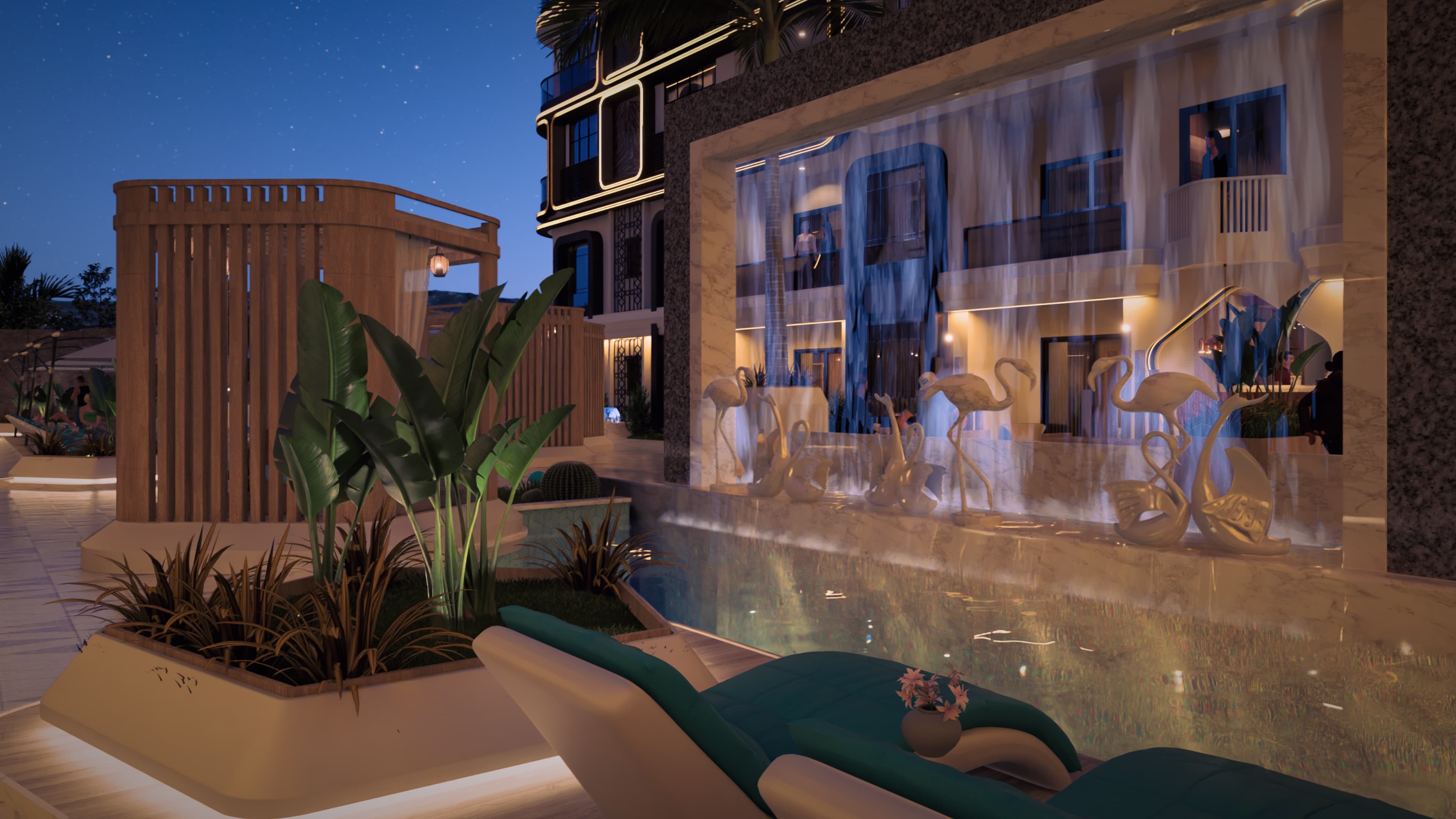
Noise also moves differently through a development. Low floors near a pool, entrance, cafe, parking ramp, or service route may hear more activity. Higher floors can still receive road, music, wind, or mechanical noise. Open the windows during the viewing, stand in each bedroom, and visit at a time when the surrounding area is active.
Pool-facing
Lifestyle view with activity
Attractive for holiday use, but compare operating hours, children's areas, speakers, cleaning equipment, and balcony privacy.
Sea-facing
Check the real sightline
Confirm whether the view is direct, angled, partial, seasonal, or dependent on an undeveloped plot remaining empty.
City-facing
Potential value and practicality
A quieter or shaded city-facing apartment may suit full-time living better than a hotter premium view unit.
Courtyard-facing
Protected but design-dependent
Internal outlooks can reduce road exposure, but check privacy distance, reflected noise, daylight, and future landscaping height.
Lift, water pressure, emergency access, and roof checks
The higher the apartment, the more daily life depends on building systems. Ask how many lifts serve the building, whether there is backup power for essential services, how maintenance is funded, and what happens during a fault. Buyers with children, limited mobility, frequent luggage, or short-term guests should test the real route from parking and entrance to the apartment.
- 1
Test the lift journey
Check lift size, waiting time, number of stops, service access, and whether furniture can be moved without damaging common areas.
- 2
Open taps and showers
In a completed unit, test pressure and drainage. For off-plan units, ask how water pressure is designed and maintained for upper levels.
- 3
Inspect top-floor conditions
Ask what is above the ceiling, how the roof is insulated and waterproofed, and whether tanks, pumps, solar equipment, or mechanical systems are nearby.
- 4
Walk the emergency route
Locate stairs, fire doors, lighting, exit routes, and the distance from the apartment to a safe exit. Obtain professional advice for technical compliance questions.
Best floor by buyer profile
| Buyer profile | Starting preference | Important exception |
|---|---|---|
| Full-time resident | Middle floor with balanced orientation and easy access | Choose based on heat, quiet, storage, parking and everyday route |
| Retiree or mobility-focused buyer | Low or lower-middle floor close to lift and entrance | Verify privacy, security, noise and backup access |
| Holiday-home buyer | Middle-high floor with an attractive balcony outlook | Do not overpay for a view that is narrow, unprotected or uncomfortable in afternoon sun |
| Rental investor | Floor with broad tenant appeal and simple access | Net performance depends on price, layout, management and operating costs, not floor alone |
| View-first buyer | Higher unit after sightline verification | Check future buildings, contract wording, wind, lift reliability and orientation |
| Top-floor buyer | Only after roof and mechanical review | No upstairs neighbor is useful, but heat and waterproofing details become more important |
Ten checks before reserving a floor
- Mark the unit on the floor plan and site plan.
- Use a compass app to confirm facade direction.
- Check morning and afternoon sun, or request a shadow study for off-plan units.
- Photograph the view from standing and seated positions.
- Identify all land and future phases in the sightline.
- Listen with windows open and closed.
- Check balcony privacy from adjacent units.
- Confirm lift count, backup arrangements, water systems, and maintenance responsibility.
- Review roof conditions for top-floor units and ground conditions for low units.
- Compare the price premium with the practical benefit you will use every day.
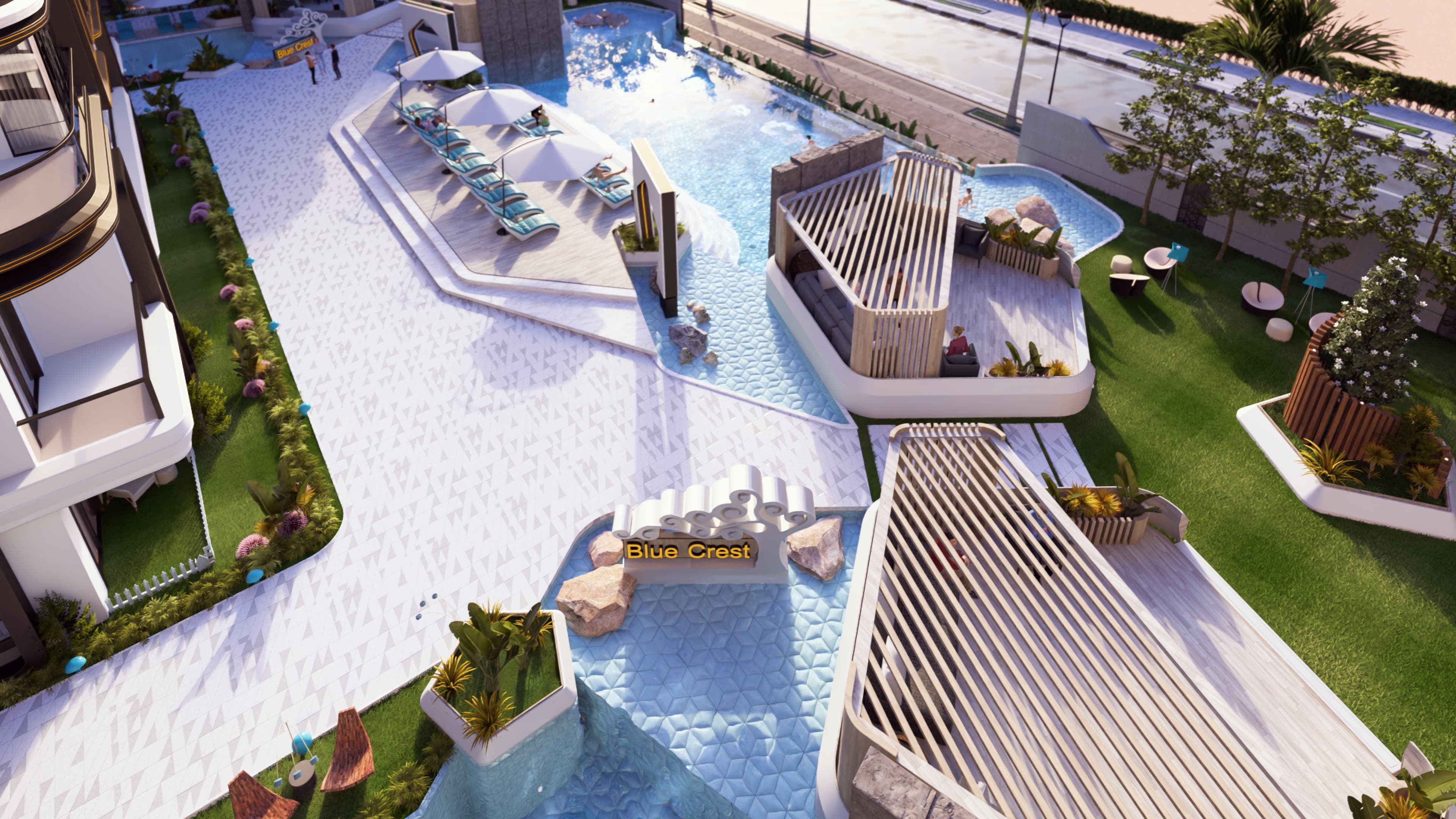
Blue Crest publishes one-, two-, and three-bedroom apartments from 46 to 140 square metres with sea, pool, or city views. That variety makes a floor-and-orientation shortlist more useful than asking only for the highest available unit. Request the current plan and compare units against your own priority order.
Frequently asked questions
What is the best floor for an apartment in Hurghada?+
For many buyers, a middle floor offers the best general balance of access, privacy, temperature, noise, and resale flexibility. The final choice should depend on the exact orientation, view, nearby buildings, balcony, lift system, water pressure, roof or ground conditions, and how you plan to use the apartment.
Is a high floor always cooler in Hurghada?+
No. Height may improve airflow in some conditions, but direct sun, glazing, wall and roof insulation, balcony shading, wind exposure, and AC design can matter more. A west-facing high unit with large unshaded glass may feel hotter than a shaded middle-floor unit.
Are ground-floor apartments a bad investment?+
Not automatically. A well-designed ground or low-floor apartment can appeal to families, retirees, and buyers who want easy access. Check privacy, security, drainage, humidity, insects, pool or entrance noise, landscaping, and whether any garden or terrace right is clearly included in the contract.
Does the top floor have the best resale value?+
Not in every project. A top floor can offer privacy and a stronger outlook, but buyers may also consider heat, roof waterproofing, lift dependence, wind, and mechanical equipment. Resale value depends on the whole unit and project, not the floor label alone.
How do I compare Blue Crest floors?+
Ask for the current site plan, building plan, floor plan, facade direction, view category, balcony position, future-phase layout, lift arrangement, and price difference between shortlisted units. Compare those facts against your own priorities rather than choosing only by height.
Next step
Compare Blue Crest units by floor and orientation
Tell the team whether you prioritize sea view, shade, privacy, easy access, quiet, or resale flexibility. They can show the current unit plans that fit those priorities.
Related buyer guides
About this guide
Written by the Kayan Development editorial team for buyers comparing homes in Hurghada. Project-specific facts are based on Kayan Development's published Blue Crest information. Legal, engineering, planning, and maintenance decisions should be confirmed with the relevant authority and an independent qualified professional.
Data reviewed: July 19, 2026. Recommended review interval: 12 months, or when project layouts change.
Sources and further checks
- Kayan Development - Blue Crest project page - Published unit sizes, view categories, location and project design information
- U.S. Department of Energy - Building orientation - Building orientation, daylight and east-west solar heat considerations
- ENERGY STAR - Residential windows and orientation - Guidance on west-facing windows, shading and solar heat gain