Buyer Due Diligence
How to Verify a Property Developer in Hurghada and Avoid Costly Mistakes
A practical due-diligence process for checking the company, project rights, approvals, delivery record, contract, and payment route before you reserve an apartment.

Quick answer
Do not judge a developer only by a showroom, website, or payment plan. Verify the legal company identity, the authority of the person signing, the developer's right to build on the land, the relevant approvals, completed-project evidence, the exact unit specification, and the bank account receiving your money. Use an independent Egyptian lawyer before signing or transferring a large amount.
Key takeaways
- Company registration and project approval are separate checks; one does not prove the other.
- Ask for documents that identify the land, project, unit, authorized signatory, and payment recipient.
- Visit delivered buildings and active construction sites instead of relying only on renders.
- The contract must define the unit, area, finish, price, schedule, delivery process, and remedies.
- Pay only through a documented company channel and keep every receipt and communication.
- An independent lawyer should represent the buyer, not the seller or sales agent.
What verifying a developer actually means
Developer verification is not a single certificate. It is a chain of checks that connects a real legal company to a specific plot of land, a permitted development, an identifiable apartment, an authorized contract, and a traceable payment route. A company can exist legally while a particular sales claim is incomplete, outdated, or outside the authority of the person making it.
The safest approach is to verify each link separately. Start with the company, then the land and project, then the construction and delivery record, and finally the contract and payment instructions. The goal is not to collect a folder of papers you do not understand. The goal is to make sure every material promise can be matched to a document, a responsible party, and a clear remedy.
Step 1: Verify the company and the person signing
Ask for the developer's current commercial registration details, registered company name, business address, tax details where applicable, and the name and authority of the person who will sign the reservation or sale contract. The legal name on the contract and payment documents should match the entity presented to you during the sale.
GAFI's published company-service procedures show that commercial-registry records, incorporation documents, and authorized company actions form part of the formal company system in Egypt. A buyer does not need to become a company-law expert, but an independent lawyer can request and review the relevant extracts and confirm whether the signatory has authority to bind the company.
- Match the legal company name across the contract, receipts, bank details, and official documents.
- Confirm the office address and visit it when possible.
- Ask who is authorized to sign and what document grants that authority.
- Check whether the sales agent represents the developer directly or is an independent broker.
- Keep copies of the salesperson's written statements, but rely on the signed contract for binding terms.
Step 2: Verify the land, project, approvals, and exact unit
Company identity does not prove the right to sell a specific apartment. Your lawyer should review the developer's legal relationship to the land, the plot description, the project approvals available at the time of sale, and the documents connecting your unit to the approved development. The exact authority and document route can vary by location and project structure, so avoid generic claims such as 'all projects use the same paper.'
- 1
Identify the plot
The contract and supporting documents should identify the project location and land clearly enough for a lawyer to connect them to the developer's rights.
- 2
Review the development approval
Ask which authority approved the project and which drawings, phases, uses, and building limits are included in the current approval.
- 3
Identify the apartment
Confirm building, floor, unit number, internal area basis, balcony or terrace treatment, view description, parking or storage rights, and finishing scope.
- 4
Check future phases
Ask whether later buildings, landscaping, roads, or commercial uses can change access, noise, privacy, or the view from the selected unit.
Step 3: Test the delivery record instead of accepting claims
A developer's strongest evidence is not the number of social-media followers. It is the condition of delivered buildings, the experience of previous buyers, the quality of common-area management, and the consistency between promised and delivered specifications. Ask to see completed projects and, where possible, speak with owners without the salesperson controlling the conversation.
Delivered buildings
Inspect condition, not only appearance
Look at entrances, lifts, exterior finishes, waterproofing signs, utility areas, landscaping, pool maintenance, and how the building has aged.
Active sites
Compare progress over time
Ask for dated progress records and visit the site. A single busy day does not prove the full construction programme, but repeated evidence is more useful than a render.
Previous buyers
Ask about the difficult parts
Discuss communication, snagging, delivery paperwork, after-sale support, service charges, and how problems were handled after payment.
Operations
Understand who manages the building
A finished unit still depends on security, cleaning, lifts, pools, landscaping, utilities, maintenance collection, and complaint handling.
Step 4: Review the contract and payment route
The contract should convert the sales conversation into precise obligations. Do not accept important promises only through WhatsApp messages or a brochure. Ask your lawyer to review the Arabic and English versions, identify which language controls, and explain any clause dealing with area variation, delivery, delays, cancellation, assignment, maintenance, utilities, force majeure, and dispute resolution.
| Contract item | What should be clear | Why it matters |
|---|---|---|
| Unit identity | Building, floor, number, plan, area basis, view and attached rights | Prevents uncertainty over what is being purchased |
| Price and schedule | Total price, due dates, reservation treatment and any extra charges | Avoids hidden or misunderstood payment obligations |
| Specification | Finishing level, fixtures, common facilities and exclusions | Makes quality promises measurable |
| Delivery | Target process, notice, inspection, snagging and consequences of delay | Defines what happens before keys are accepted |
| Payment recipient | Legal company account and official receipt process | Creates a traceable payment record |
| Buyer exit | Cancellation, transfer, resale or assignment conditions | Shows the cost and process if plans change |
Red flags that deserve an immediate pause
- The company name changes between the brochure, contract, receipt, and bank account without a documented explanation.
- You are pressured to pay today before a lawyer can review the documents.
- The salesperson refuses to identify the plot, unit, approved plan, or authorized signatory.
- The delivery date, sea view, finishing scope, or payment plan exists only in chat messages.
- Returns, appreciation, occupancy, or resale are presented as guaranteed.
- The contract allows broad substitutions but gives the buyer no practical remedy.
- You cannot visit delivered projects or receive a credible explanation of previous work.
- Cash discounts are offered without an official receipt and company payment record.
A red flag is not always proof of fraud. It is a reason to stop, document the issue, and ask for independent verification. Good developers should expect serious buyers to ask serious questions.
How to apply the checklist to Blue Crest
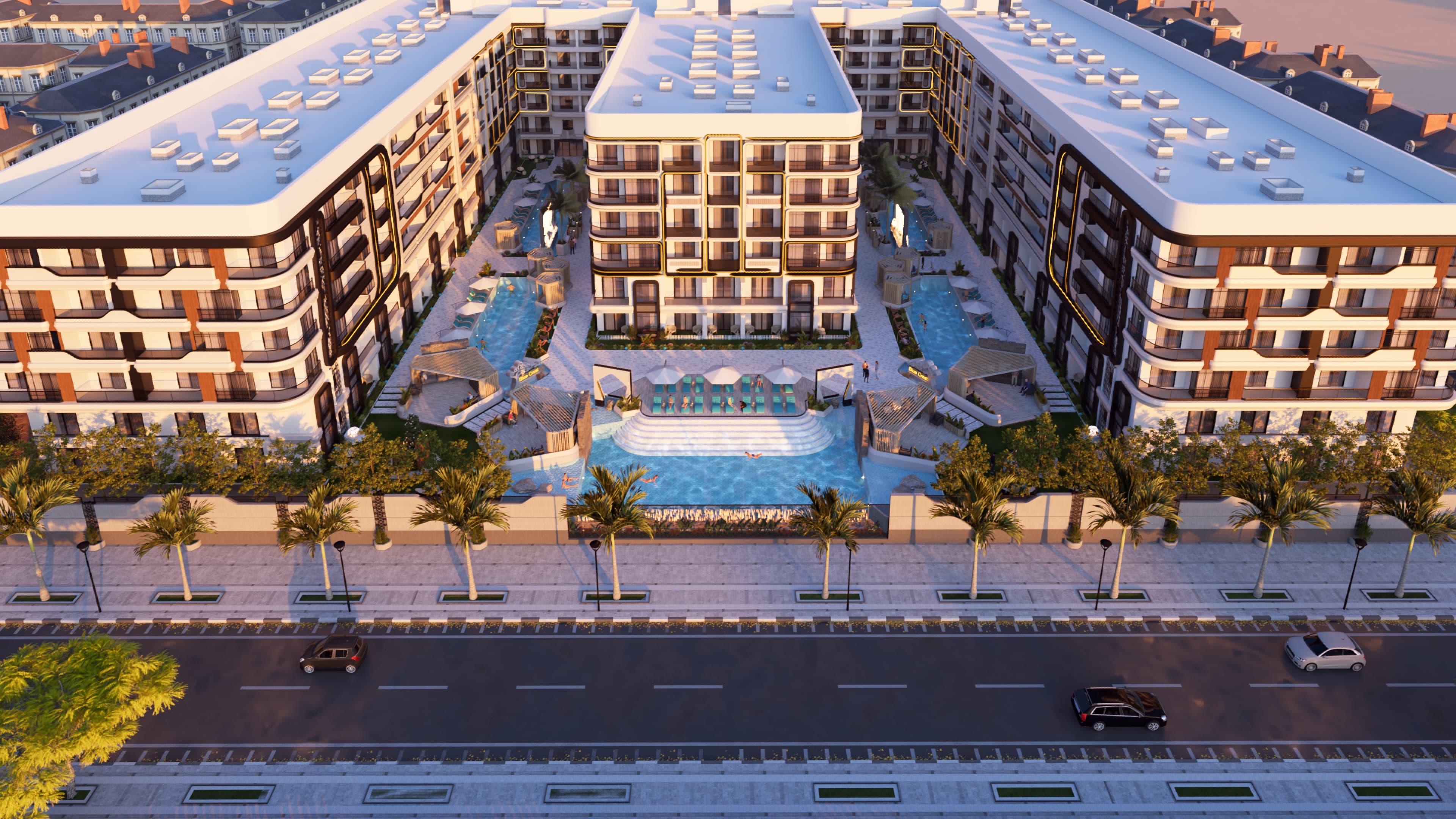
Kayan Development's published Blue Crest page describes a 10,000 square metre development in El Hadaba with three buildings, 680 apartments, one- to three-bedroom layouts from 46 to 140 square metres, and sea, pool, or city-view options. It also publishes the developer, location, amenities, delivery windows by phase, office address, phone number, and enquiry form.
Those published facts help a buyer prepare questions, but the same rule still applies: request the current unit plan, price and payment schedule, project documents available for review, exact view and orientation, phase, delivery terms, finishing specification, maintenance approach, and contract. Marketing information should match the current signed documents for the selected apartment.
Frequently asked questions
How can I verify a property developer in Hurghada?+
Check the legal company identity, commercial-registry information, authorized signatory, land and project documents, building approvals, completed developments, active-site progress, contract terms, and company payment account. Use an independent Egyptian lawyer to connect the documents to the exact unit before signing or transferring a major payment.
Does a commercial registration prove a Hurghada project is approved?+
No. Commercial registration helps verify that a company exists and operates through a formal legal structure. It does not by itself prove the developer's rights over a particular plot, the approval of a specific development, or the right to sell the apartment shown to you. Those require separate project checks.
Should I use the developer's lawyer?+
The developer's lawyer represents the developer's interests. A buyer should appoint an independent lawyer who can review the documents, explain risks, compare language versions, and advise the buyer without a sales conflict. The scope and fee should be agreed before the review begins.
What documents should match before I pay?+
The legal company name, authorized signatory, unit reference, project location, contract price, payment schedule, bank beneficiary, and receipt issuer should be consistent. Any difference should be explained and documented by your lawyer before payment.
Can a developer guarantee rental yield or appreciation?+
Treat guaranteed market returns with caution. Rental income and resale value depend on demand, operating costs, condition, management, seasonality, regulation, exchange rates, and future supply. Ask for the assumptions behind any projection and keep it separate from the legal obligations in the sale contract.
Next step
Review Blue Crest information before you decide
Ask the Kayan Development team for the current project information, unit plan, payment structure, delivery explanation, and the documents available for buyer due diligence.
Related buyer guides
About this guide
Written by the Kayan Development editorial team for buyers comparing homes in Hurghada. Project-specific facts are based on Kayan Development's published Blue Crest information. Legal, engineering, planning, and maintenance decisions should be confirmed with the relevant authority and an independent qualified professional.
Data reviewed: July 19, 2026. Recommended review interval: 90 days, or sooner when project documents change.
Sources and further checks
- Kayan Development - Blue Crest project page - Project, unit, location, amenity and contact information published by the developer
- General Authority for Investment and Free Zones - company services - Official information on incorporation documents and commercial registration
- GAFI - E-Investment Gazette service - Official service describing company incorporation and amendment publication documents